




I typically do not share stories that happen to friends since you get into the habit of doing friends of friends and you end up on Snopes (a site dedicated to debunking urban legends). But a recent experience a friend of mine had at Gary Rack’s Farmhouse Kitchen in Coral Springs warranted an exception to my rule.
My friend met up with some people during Farmhouse Kitchen’s popular daily Happy Hour (3:00 PM to 6:00 PM). They ordered a spread of their discounted shareables, items like the Wings and Margherita Flatbread, which drop from their standard $18–$19 down to a crisp $9–$10 on the Happy Hour menu. It was no accident that they chose to there during happy hour when the food and drinks were half price.
The concept of Happy Hour is supposed to be the ultimate win-win for the restaurant and the customer. The restaurant fills its seats and sells food and drinks during the slow afternoon time period, and the customer gets to enjoy discounted food and drinks. Not that complicated. It happens in restaurants and bars all across the USA.
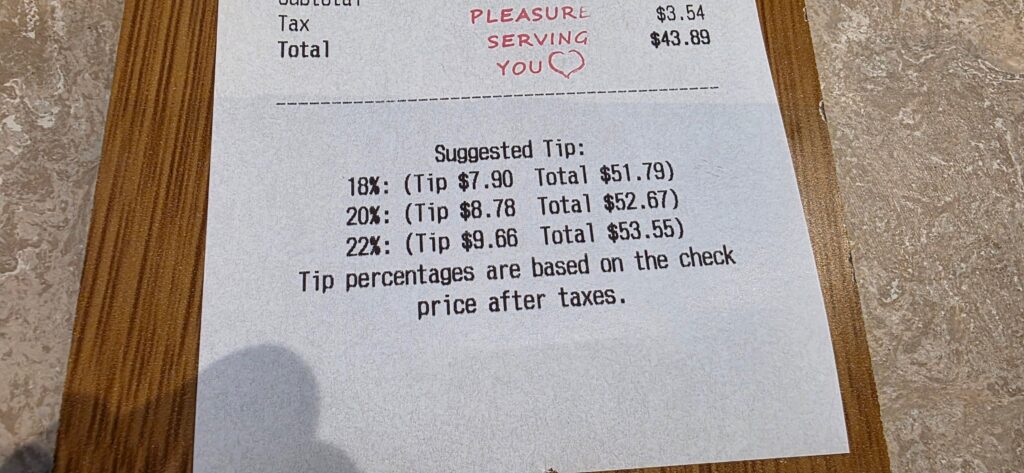
When my friend was getting ready to leave, he received the bill which turned out to be $66 for the two couples with his portion being $33 before tax and tip. My friend was happy with the food, drink and experience of the restaurant. I have to say that the other Farmhouse that I have eaten at were enjoyable as well. The problem that arose with my friend was that when he went to charge the bill, the credit card pad (I think that restaurants call them terminals but I like pads instead) recommended tip of 20%, 22% and 25% were based upon the regular menu instead of the happy house prices. So, it recommended a tip of $20 instead of $6.60.
The Full Price Gratuity Trap
To repeat, the restaurant’s point-of-sale system was calculating the 20% gratuity based on the original, full menu prices of the dishes, rather than the actual discounted Happy Hour prices they were billed for. The restaurant’s logic was probably rooted in the idea that the server did the same amount of work, regardless of the discount. While it is true that carrying a $19 plate of zucchini chips takes the same physical effort as carrying a $10 plate of zucchini chips, pricing a 20% tip suggestion on the full price is misleading, deceptive, and plain wrong.
Here is why this practice crosses the line:
- This behavior preys on lack of attention of the customer: Most diners trust the software. When we swipe a card and see 18%, 20%, 22%, we assume the machine is calculating a percentage of the cash amount we are actually being asked to pay. (A confusion does exist on whether the tip should be based upon the pre-tax amount or the post-tax amount and I believe everything should be based upon pre-tax prices). Basing tip prompts on ghost prices that do not exist on the subtotal line is a real manipulation of consumer trust.
- Tipping is meant to be a direct relationship between the guest and the server. If a guest wants to top up their tip because the waitstaff did provided excellent service, they should definitely do so since they have that right. The machine shouldn’t make that choice for them especially with no notice or explanation.
- If a restaurant advertises a 50% off Happy Hour deal to get you through the door, but secretly builds full-price liabilities into the backend of the checkout process, the deal isn’t actually what it seems.
How to Avoid This Issue
There are two ways to avoid this problem. First, you should always double-check the recommended tip amounts (which is relatively easy since you carry a calculator in your pocket (your iPhone).
Second, you could skip tipping a server based upon a percentage of the bill. You could tip a flat amount on your dining experience. If you follow this then at a happy hour event, you could end up tipping the server more than the recommended 20% since they are providing you a valuable experience.
My final recommendation is to avoid restaurants that base their recommended tip amounts on ghost prices and double check the tipping amounts presented on your bill.