





I found another ridiculous story related to tipping in restaurants. Let’s be honest. Tipping in America has gotten completely out of hand. What used to be a simple thank you for great service has warped into a high-pressure, guilt-driven transaction.
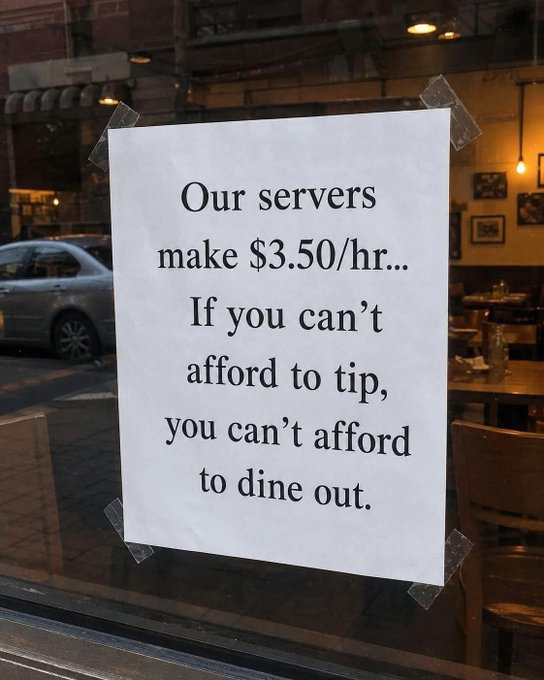
Another restaurant made headlines recently after tip-shaming its clientele. Rather than managing its labor costs itself, this restaurant chose to put patrons on the hook, demanding higher tips for its staff and by highlighting how low it pays its employees.
This incident turns out to be just another example of how the tipping culture in America has allowed hospitality business owners to completely lose sight of their responsibilities to their employees.
Shifting the Labor Burden to the Patron
For decades, the restaurant industry has benefited from an economic loophole in which there is a lower minimum wage for tipped employees. In many states, employers are legally permitted to pay their staff a fraction of the standard minimum wage, under the assumption that customer tips will make up the difference.
But lately, restaurants have started offloading more and more of this responsibility onto us. We’re way past the days of leaving 15% to 20% for a nice sit-down dinner. Now, we’re faced with aggressive iPad touchscreens, self-serve kiosks, and takeout windows asking for 25% or 30% tips. You used to just grab your bag of fast food and go. Now you have to look an employee in the eye while tapping No Tip for a transaction that took 30 seconds. This creates an awkward encounter for everyone involved.
I believe that the restaurant industry has it all wrong. It is their responsibility to figure out overhead, price their products accurately, and compensate their workforce. This is how almost all other businesses in America operate. We do not see tipping jars at Car Dealers!
The Toxic Dynamic of Tip-Shaming
Publicly chastising a diner for an insufficient tip creates a fundamentally adversarial environment between the restaurant and diner. Diners are no longer guests enjoying a hospitality experience; they are captive sources of money for an underpaid staff.
This dynamic is toxic on multiple fronts:
It creates a culture of fear for workers: When restaurants mandate high tip averages or pressure employees to squeeze extra percentages out of guests, the server is caught in the crossfire. If a customer chooses not to tip or tip lower than demanded, the server is left shortchanged, and the management blames the customer taking responsibility.
It alienates the consumer: We are experiencing tip fatigue. Being guilted into paying a premium on top of already skyrocketing menu prices and the ever-increasing places requesting tips, has driven a massive backlash. When a restaurant weaponizes social media or receipts to embarrass a patron, it isn’t advocating for its staff, it is deflecting accountability.
Reclaiming the Core Responsibility of Business
My message is clear, our current situation and the way it is headed is unsustainable. If a business cannot afford to pay its workers a livable wage without relying on its customers, then this business model is broken.
We need to rethink our whole tipping approach and incorporate how other cultures do it. As part of this, restaurants need to step and pay their employees. In order to do, restaurants will need to reprice their food and drinks to incorporate these costs. Trying to shame their customers is not a business model that will succeed over time.